I Connect Medical Devices to Hospitals for a Living. Here's What the Hospital of the Future Actually Needs
If you've sat through a conference keynote or flipped through a new tower's design brochure lately, you've seen the vision. Smart rooms that know who's in the bed. AI flagging a patient who's about to decline before anyone else notices. Vitals flowing straight into the chart. Alarms reaching the right nurse on the right device…

Josh Koop
My test description to showcase on the template
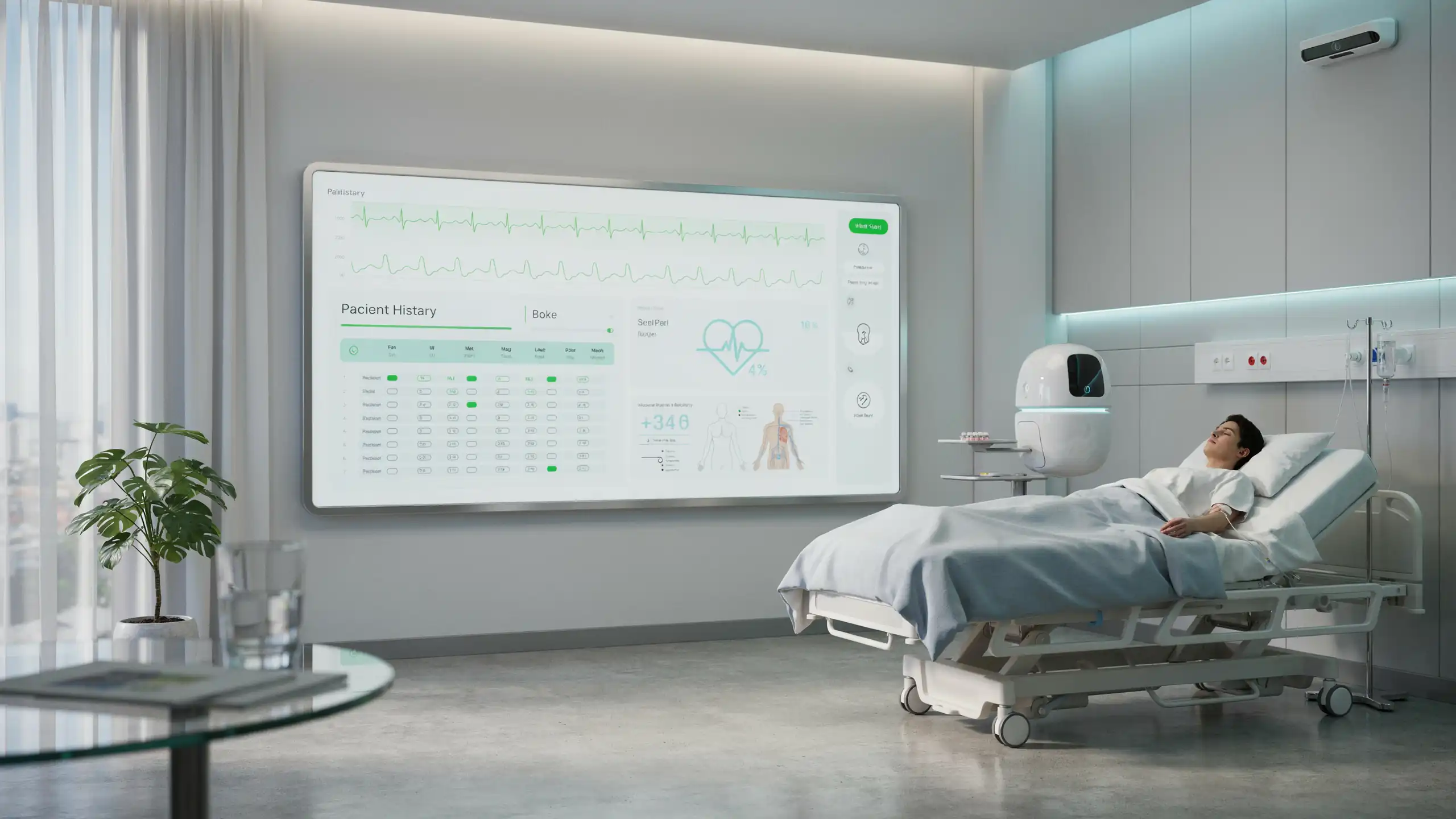
If you’ve sat through a conference keynote or flipped through a new tower’s design brochure lately, you’ve seen the vision.
Smart rooms that know who’s in the bed. AI flagging a patient who’s about to decline before anyone else notices. Vitals flowing straight into the chart. Alarms reaching the right nurse on the right device in seconds. Robots running supplies down the hallway.
I’ll be fair here. That’s a good vision. Most of it is worth building, and some of it is closer than people think.
But I spend my days on the other side of those renderings.
I work in medical device integration. My job is making sure the monitor, the pump, the ventilator, and the EHR all agree on who the patient is and what’s happening to them.
And from where I sit, the hospital of the future won’t be decided by the features in the brochure.
It’ll be decided by everything underneath them.
What Medical Device Integration Actually Is
At its simplest, device integration is getting data from a medical device into the right patient’s record, accurately and on time.
That sounds easy.
It isn’t.
A bedside monitor knows a heart rate. It doesn’t inherently know whose heart rate it is. Somewhere between the device and the chart, that reading has to be tied to the correct patient at the correct time. Then it has to land in the correct spot in the EHR, where a nurse can validate it.
A lot happens in between:
- The device itself
- The network it rides on
- Middleware or an integration engine that translates the device’s language into something the EHR understands
- The interfaces that move the data
- The servers that keep all of it running
When it works, nobody notices. A nurse finds vitals already waiting in the flowsheet, instead of jotting numbers on a scrap of paper and typing them in later.
When it doesn’t, the question is never “is the AI working?”
It’s “why is this patient’s blood pressure in someone else’s chart?” Or “why didn’t this come across at all?”
In other words, integration is the trust layer. Everything smart a hospital wants to do later depends on it.
The Headlines Go to the Shiny Stuff. The Plumbing Does the Work

Here’s the part people don’t see: almost every “future” feature assumes the data underneath it is already clean.
A predictive early warning model is only as good as the vitals feeding it. If readings are delayed, missing, or attached to the wrong patient, the model isn’t predicting anything. It’s guessing.
Smart alarm routing only helps if the alarm reliably leaves the device, crosses the network, and reaches a phone that’s actually assigned to that patient.
Pump auto-programming only saves time if the pump, the EHR, and the drug library all line up.
None of that is the exciting part of the pitch. Nobody puts device time synchronization on a ribbon cutting banner. (Maybe they should. When device clocks drift, documentation times drift right along with them.)
And honestly? That’s fine. The plumbing doesn’t need applause.
It just needs to be planned, funded, and staffed like it’s part of patient care.
Because it is.
What I See Day to Day in the Field
Lots of belief in systems not truly tested in the real world with real people and real patients. Much is sold on vendor visions and things they “ran tests” on. Rarely do these work the same in real life on real data.
Take for example the simple devices from the IoT world, a Whoop bracelet or Oura ring. These devices appear fairly straightforward. The issue is moreso that the data has to go from this device, through a phone, to the vendor’s infrastructure (security issues, identification issues), then this data has to leave them (security issues, identification issues) and head into your hospital infrastructure (way more security issues, identification issues), then has to get processed in an interface (formatting, processing issues, and identification issues) for display in an EHR.
As you can see above, this looks easy when sold to a hospital but the work in the background for a “simple” device can have months to years of preparation to ensure safety and security are kept paramount. The testing, validation, workflow building and sign off, as well as any downtimes are nearly never contemplated before the choice was made.
At the end of the day what we are trying to achieve as IT within healthcare is to help achieve more clinical wins, time savings charting, and removing or limiting manual entry of data which can lead to medical errors.
Interoperability Has to Be Planned, Not Patched
Most of the pain I see could be avoided by asking one question earlier: how will this device talk to everything else?
Too often that question shows up after the device is purchased, delivered, and sitting in a storage room waiting on go-live. At that point you’re working backward, fitting an interface around a decision that’s already been made.
The good news is the industry has real standards to lean on:
- HL7 v2 is still the workhorse for moving clinical data between systems.
- FHIR keeps growing, especially for newer applications.
- IHE has profiles built specifically for patient care devices, which give manufacturers and hospitals a shared playbook for how device data should be communicated.
Standards help.
They don’t do the work for you.
A few things that make interoperability go smoother:
- Bring integration into the purchasing conversation, not just the installation.
- Ask manufacturers exactly which standards and profiles a device supports, and which versions.
- Decide early how devices get associated with patients (barcode scanning, location based association, or a combination). Then walk through how that fits real nursing workflow.
- Test with real workflows, not just a clean test patient on a quiet afternoon.
- Plan for downtime: what happens to device data when an interface or server is unavailable, and how it gets reconciled afterward.
The future hospital isn’t the one with the most connected devices.
It’s the one where the connections were designed on purpose.
The Network Is a Clinical System Now
There was a time when the network was treated like a utility. Important, but separate from patient care.
That line is gone.
Monitors roam on wireless. Pumps pull drug library updates over the network. Alarms travel across it to clinician phones. Telemetry, imaging, and the EHR all depend on it being there every second of every day.
So the network has to be designed like a clinical system, because that’s what it has become. That means:
- Coverage surveyed for where care actually happens, including elevators, stairwells, and that one far corner of the unit everyone knows about.
- Segmentation, so medical devices live on networks built for them rather than sharing space with everything else.
- Redundancy and monitoring, so problems get caught before a clinician ever notices.
The same goes for the servers behind it all. Integration engines, device middleware, and interface servers aren’t back office systems anymore. If they go down, documentation goes with them, and sometimes alarm communication does too.
They deserve the same uptime planning as anything else that touches patient care.
Every Device Is an Endpoint: Security and Lifecycle
Every connected device is a computer on the network.
Some of them just happen to be attached to a patient.
That changes the security conversation. You often can’t patch a medical device the way you patch a laptop. Updates may need manufacturer validation first, and some devices run older operating systems that can’t simply be upgraded.
That’s not a failure on anyone’s part. It’s the reality of regulated equipment built to run safely for a long time.
What helps is visibility and planning:
- Know what’s on the network. An accurate inventory of every connected device, its software version, and where it lives is the foundation for everything else.
- Use the security documentation manufacturers provide, like the MDS2 form, and ask for a software bill of materials (newer devices increasingly come with one).
- Segment and monitor the devices you can’t patch.
- Plan for lifecycle from day one.
That last one matters more than people expect.
A medical device can stay in service for many years or even decades, typically longer than the servers, operating systems, and network gear around it. A device that fit perfectly at purchase can end up out of step with everything around it halfway through its life.
The hospital of the future isn’t the one that never has old equipment. It’s the one that knows exactly what it has, and has a plan for it.
What the Hospital of the Future Actually Needs
So here’s my honest answer, from someone who connects these pieces for a living.
The hospital of the future needs:
- Clean, trusted data, tied to the right patient at the right time, before anything smart gets built on top of it.
- Integration planned at purchase, not patched in after delivery.
- Network and server infrastructure treated as clinical systems, with the coverage, segmentation, and uptime to match.
- Full visibility into every connected device, with a real plan for its lifecycle.
- Every team at the table early: clinical engineering and biomed, IT, networking, integration, security, and the clinicians who will actually use the system.
Each of those groups sees a piece of the picture the others can’t. The best projects are the ones where they plan together from the start.
None of that makes for a flashy keynote.
But it’s what makes the flashy stuff actually work.
The AI, the smart rooms, the predictive alerts: all of it rests on work happening every day in device closets, interface queues, and wireless surveys.
If that’s your work too, whether you’re in biomed, IT, networking, integration, or leadership, take some pride in it.
You’re not waiting on the hospital of the future.
You’re building it.