Most Blog Posts Are a Rewrite of Page One. Here Are the Types Worth Writing Instead
You've done this. You search a simple question. You open the first five results. And you read basically the same article five times. Same headings. Same tips in the same order. Same "in conclusion" at the bottom. The words are shuffled around a little, but every one of them says the exact same thing. That's…

Josh Koop
My test description to showcase on the template
You’ve done this.
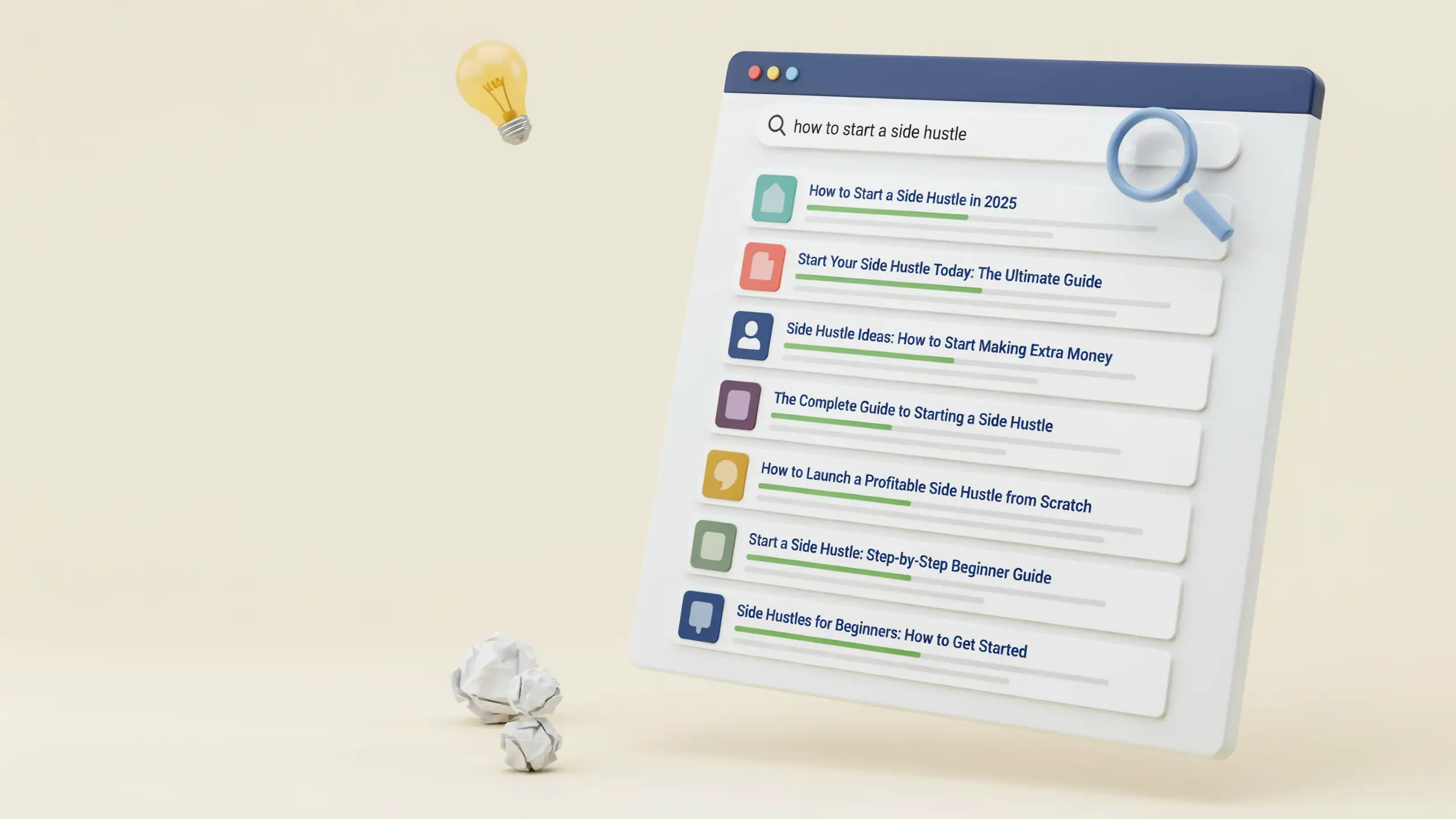
You search a simple question. You open the first five results. And you read basically the same article five times.
Same headings. Same tips in the same order. Same “in conclusion” at the bottom. The words are shuffled around a little, but every one of them says the exact same thing.
That’s not an accident. For nearly a decade, that’s how blogging worked. Find a keyword, look at what’s already ranking, write your own version of it, and hope Google picks yours.
I know because I did it too. I built and sold 11 niche websites, and I’ve written just about every type of blog content there is.
Here’s what I learned: the type of post was never really the problem.
What’s inside it is.
Why So Many Blog Posts Say the Same Thing
Most blog content is built backwards.
Instead of starting with “what do I know that would actually help someone,” it starts with a keyword. Then it looks at what’s already ranking for that keyword. Then it writes something that covers the same points, in roughly the same order, so it looks just as relevant.
The result is a rewrite of page one.
This isn’t wrong, per se. It’s just not new info. There’s no true gain of knowledge or information. Nothing the reader couldn’t have gotten from the article right above it.
And that’s exactly the kind of content that’s dying.
Keyword-focused content, and anything that just rephrases what already exists, is losing ground. Search is moving away from the keyword spamming techniques that worked for years, and toward content that actually adds something.
Which means the question isn’t “what type of post should I write?”
It’s “what can I add that isn’t already out there?”
The Content Types I’ve Actually Written
Over the years I’ve written reviews, pillar posts, best-of lists, how-tos, comparisons, and short question answers. Every one of them can be useful. Every one of them can also be a page one rewrite.
Here’s how I think about each.
Reviews and Comparisons
These are only worth writing if you’ve actually used the thing.
A review from someone who never touched the product is just a rewrite of the product listing and everyone else’s reviews. A comparison is the same, just with two listings instead of one.
But a review from someone who lived with a product for weeks or months? That’s real information gain. You know things the listing doesn’t say, like how it holds up, what annoys you by week two, and who it’s actually right for.
That’s my whole standard for recommending anything on this site, and I wrote more about it in my post on how I decide what’s worth recommending.
How-Tos and Pillar Posts
These are the most likely to turn into page one rewrites.
There are only so many ways to explain how to do something, so a lot of how-tos end up nearly identical. Pillar posts, the big “everything you need to know” guides, have the same problem at a bigger size.
They’re worth writing when you bring something the others don’t. A step you learned the hard way. A mistake you made that nobody warns you about. A result you can actually show.
If your how-to reads exactly like the top three, it’s not adding anything.
Short Question Answers
These are the quick posts that answer one small, keyword-specific question.
I’ll be honest: they don’t seem to work long term.
You may get a short boost when one of them starts ranking. But typically, they get removed within a Google update that comes afterward. A thin answer to a question that ten other sites have also answered just doesn’t hold up.
If the answer fits in two sentences, it probably belongs inside a bigger, more useful post instead of on its own.
Best-of Lists: Where the Sales Actually Happen
If you’re building a site to make money, here’s something worth knowing.
Of everything I’ve written, best-of lists drive the most interaction for sales.
It makes sense. Someone searching “best hammock for camping” is already close to buying. They just want help choosing. A good best-of list meets them right at that moment.
But here’s the catch, and it’s a big one.
Best-of lists are also the type most likely to be junk. A lot of them are ten products the writer never touched, ranked by whichever one pays the biggest commission. Readers have been burned by those enough times that they can smell it.
An honest best-of list from someone who actually used the products is still one of the most valuable things you can write. A fake one does damage to every recommendation you make after it.
What Drives Traffic Depends on Where Your People Are
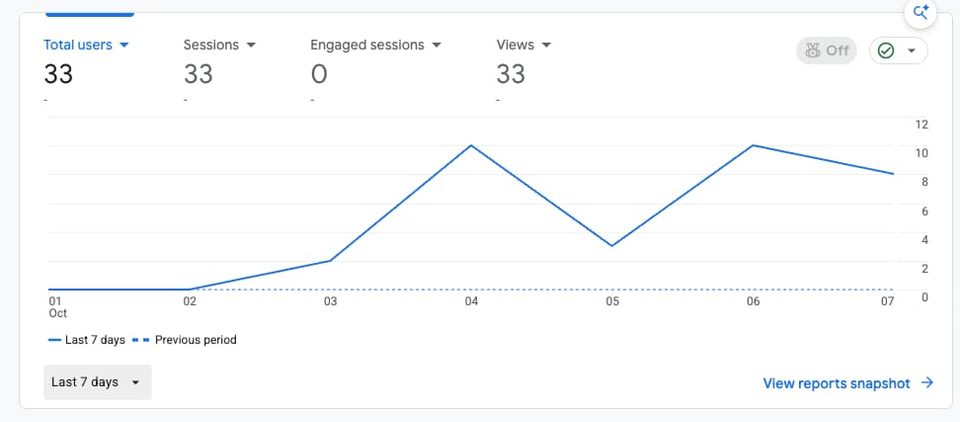
People always ask me which content type gets the most traffic.
The honest answer? It really depends on the site.
If you’re relying on search, your content tends to align to keywords. That’s how search works. You write what people are searching for, and you try to be the best answer.
But if you have any kind of social following, the game changes. Social runs on shares. People share things that are useful, surprising, honest, or that make them think “my friend needs to see this.” None of that has anything to do with keywords.
So before you pick a content type, ask where your readers are actually coming from. The answer changes what’s worth writing.
How I Choose What to Write on JoshKoop.com
Here’s how I approach this site, and it’s pretty different from how I ran my niche sites.
I’m not focused on getting search traffic here.
I write what I believe is genuinely useful information, whether it lines up with a keyword or not. The people I’m writing for are people I know, and people who follow me on YouTube and social media. My hope is that they find something helpful and share it with their friends.
And honestly? That opens up nearly any type of post to being a performer.
A personal story about going on a GLP-1. An opinion piece on why I don’t run ads. A gear review from real use. None of those were written to rank for a keyword, and none of them needed to be. They just needed to be useful enough that someone would pass them along.
When you write for people instead of for search, the content type matters a lot less. The honesty matters a lot more.
The One Type I Refuse to Write
There’s one type of content I don’t ever really want to touch.
Straight affiliate content built on paid brand deals.
You know the kind. A brand pays you, and suddenly their product is “the best I’ve ever used.” The post reads like a review, but it’s really just a damned ad.
I don’t want to sell my audience a false story. Even if it costs me direct money on the blog itself.
I already said no to plastering this site with ads, and I wrote about why in my post on why on-site ads are dying for smart creators. Paid brand deals are the same trade with a nicer coat of paint: a little money now, in exchange for the trust that makes everything else work.
Not worth it.
So, Which Type Should You Write? My Honest Answer
Whichever type lets you add something only you can add.
A review, if you’ve actually used the product. A how-to, if you learned something the hard way that nobody else is saying. A best-of list, if you’ve genuinely tested what’s on it. A personal story, if it’s yours to tell.
What I’d skip is anything that starts with “what’s already ranking?” and ends with a slightly reworded version of it. That content worked for a long time.
It doesn’t anymore.
If you’re building a site right now, I talked more about what I’d do differently in my post on selling 11 niche websites.
Write the post only you could write.
That’s the type that lasts.