The Baggy Pants and Shirt Weren't Hiding Me: What I Learned About Choosing Gym Clothes at 270 Pounds
For years I wore baggy pants and shirts to the gym to hide. At 270 pounds, here's what I look for in gym clothes now, and why I'm done cheaping out on myself.

Josh Koop
My test description to showcase on the template
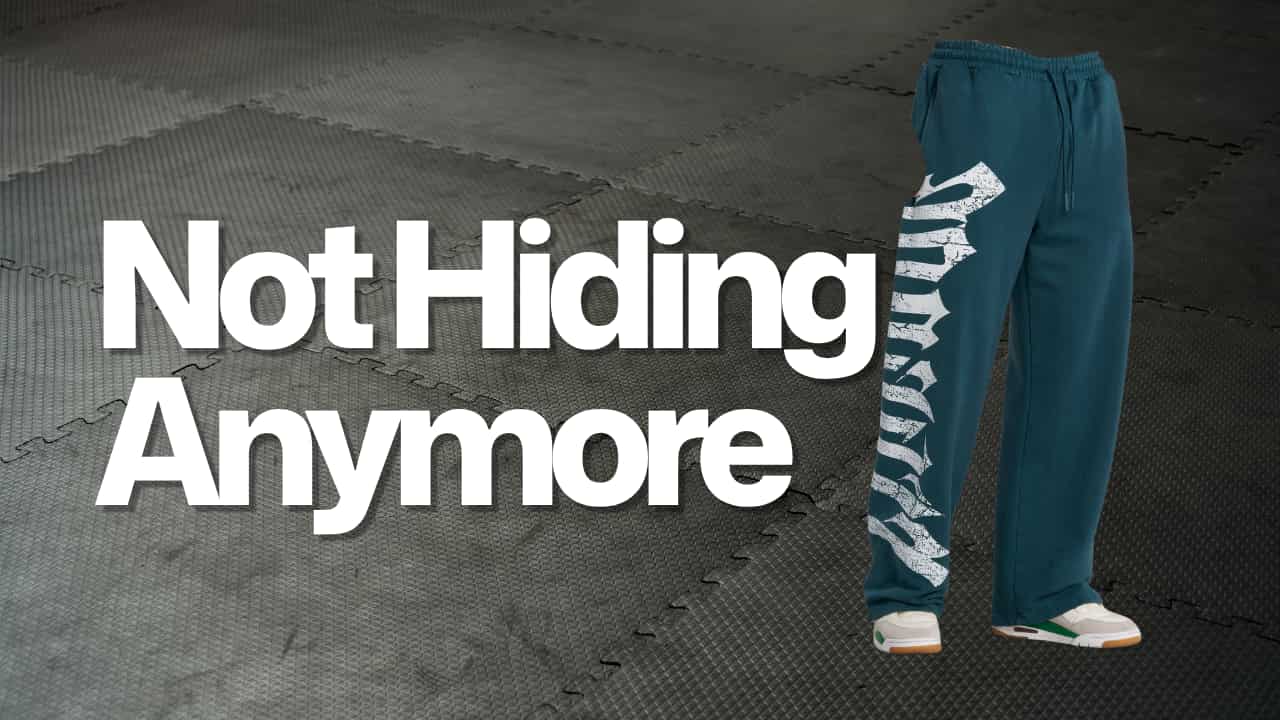
For most of us, the baggy pants and shirt were never a fashion choice.
They were armor.
A shirt a size or two too big, usually dark, hanging low enough to cover whatever we didn’t want anybody looking at. Pants loose enough that nobody could make out much of anything underneath. We told ourselves it was about comfort. Really it was about getting through a workout without feeling like everyone was watching.
I get why we do it. But somewhere along the way I realized those clothes weren’t hiding me from anyone, it was just a lie I was telling myself to hide from myself.
They were just keeping me small.
Why the Baggy Clothes Felt Safe
If you’ve ever walked into a gym at a bigger size, you know the feeling. You scan the room before you even set your bag down. You pick the machine in the corner. You hope nobody’s paying attention to you.
Most of us have earned that caution the hard way. We’ve been stared at, laughed at, and talked down to because of our size, and a lot of that happened in places that were supposed to be about getting healthier.
So we cover up.
The problem is, people still see us. Giant clothes don’t make anyone invisible. If anything they just tell the world, and more importantly tell us, that we’re still trying to hide.
Personally, I finally understood that baggy clothing just allowed me to lie to myself. I came to understand that other people still saw the fat me no matter how much I hid it from myself. I snapped out of it when I realized that giving myself excuses for everything gave me the excuse to be nothing.
And honestly? Clothes that don’t fit don’t just look off. They get in the way. Shirts that ride up on a bench press. Sweats that sag on every squat. Pant legs that drag under your heels or catch on a bench. Fabric that soaks through and sticks to you halfway into a workout.
It’s hard to focus on the work when you’re constantly fixing your clothes.
The “I’ll Buy Nice Gym Clothes When I Lose the Weight” Trap
Here’s a thought most of us have had at some point:
I’ll buy real gym clothes once I lose the weight.
It sounds reasonable. Why spend money on clothes you’re going to shrink out of?
But look at what that thought is actually saying. It’s saying we haven’t earned it yet. That we don’t deserve to feel good in the gym until our body looks a certain way.
That’s the same mentality I wrote about in my post on whether using a GLP-1 is cheating. For generations we’ve been taught that weight loss is supposed to hurt, and if it doesn’t hurt enough, it doesn’t count. Wearing clothes that don’t fit, feel bad, and make us self conscious becomes one more way to suffer for results.
There’s no prize for doing it the most uncomfortable way possible.
The version of you that’s showing up to the gym right now is the one doing the work. That person deserves gear that helps.
What to Actually Look For in Gym Clothes at a Bigger Size
Most gym clothing advice is written for people who already look like the models in the ads. So here’s what actually matters when you’re working out at a bigger size.
Fit over size
The goal isn’t tight, and it isn’t baggy. It’s clothing that moves with you. A shirt should have room in the shoulders and chest without hanging like a tent. Shorts or joggers should give your thighs room to move without bunching or riding up.
For pants, a tapered jogger with a cuffed or fitted ankle is usually a better bet than wide, heavy sweatpants. You get room through the hips and thighs without extra fabric flopping around your feet or getting caught on equipment.
Fabric that breathes
Cotton feels comfortable at first, but it soaks up sweat and gets heavy. Moisture wicking fabrics (usually polyester or nylon blends with some stretch) pull sweat away from your skin and dry faster. When you sweat a lot, like most of us do, this makes a real difference.
Don’t ignore chafing
Nobody talks about this enough. If your thighs rub, longer inseam shorts or shorts with a built in liner can save you a lot of misery. Seams in the wrong place can rub your skin raw too, so pay attention to where they sit.
Seams and waistbands that hold up
Look for flat seams that lie against your skin instead of thick raised ones. A gusseted crotch (that diamond shaped panel) gives you room to squat and lunge without stressing the seams. And a wide waistband with a drawstring is far less likely to roll down or dig in.
Go by the size chart, not the letter
An XL in one brand can be a medium in another. Measure your chest and waist and compare them to the brand’s actual size chart. Reviews from bigger guys are gold here, because they’ll tell you how it fits a body like yours.
And if you can, do a squat test before you cut the tags off. If it pulls, rides up, or feels wrong when you move, it’s going to bother you every single workout.
Why I Chose YoungLA (and Stopped Cheaping Out on My Future)
I’ll be fair here. You don’t need an expensive brand to start working out. A cheap shirt and sweats from Amazon which fits and breathes beats a premium one sitting in your closet. If money’s tight, start with what you can afford and focus on fit.
But for me, the price was kind of the point, investing in me isn’t a bad thing.
I have chosen to go with YoungLA, an amazing brand who makes quality gear that’s not necessarily “inexpensive,” but I am done treating myself like it’s ok to cheap out on me anymore.
For years I treated my own health like an afterthought, focused on working hard and getting my daughter through high school. Choosing the bargain bin clothes. Living by the “it’s good enough” attitude. The idea that spending money on myself was something I’d do later, once I was the person I wanted to be.
I’m not doing that anymore.
My Youngla gear is super comfortable and has outstanding quality, and each month I am working to add more options to my wardrobe as im striving to reach working out five days a week.
Full transparency: that YoungLA link is my referral link. It’s not a commission. If you use it, you get 15% off your first order of $35 or more, and I get some points toward more gear. That’s it. I’d recommend them either way.
These Clothes Are a Promise, Not a Prize
Here’s the part that matters most to me.
These clothes are a promise to myself to not just use shots. It’s to put in the work, build more muscle, get stronger, and become the person I imagined I always could be.
I’m about two months into my GLP-1 now and down from 281 to 270. The medication has quieted a lot of the food noise. But I know what it can’t do.
It can’t build muscle for me.
In fact, if I’m not careful, I can lose muscle right along with the fat, which is something I talked about in my post on the questions to ask your doctor before starting a GLP-1. That’s a big part of why my doctor and I went with a low dose plan. I want fat loss, not a race to the bottom of the scale that leaves me weaker than when I started.
So the gym isn’t optional for me.
And showing up in clothing I’m proud of, gear I chose on purpose, is a daily reminder of why I’m there.
The person I know I can be is impressive, he’s the one in the military at 160 pounds after basic training that I didn’t even know was me in graduation pictures.
I want to be that fit, that strong, that lean again. I want to feel like I belong in any circumstance, that if help was needed people would look to me for that help, not skip past me thinking I couldn’t help in a situation due to my obesity.
Gym Clothes Won’t Do the Work Either
Let’s be honest about this too.
A nice shirt doesn’t squat for you. Good sweats or shorts don’t get you out of bed. New gear can feel great for a week and then sit in a drawer like every other good intention most of us have had over the years.
It’s the same thing I’ve said about the medication. It changes the starting line. It doesn’t run the race.
The effort is still mine. The discipline is still mine.
The clothes just remove one more excuse. No more pulling down my shirt or hiking up my pants between sets. No more feeling like I’m trying to disappear. Just me, the work, and nothing in the way.
So, Does What You Wear to the Gym Really Matter? My Honest Answer
Yes. But not for the reason most people think.
It’s not about looking good for anyone else. It’s about what your clothes say about how you treat yourself.
For years, my clothes said I was hiding. That I didn’t think I deserved better yet. That I’d invest in myself someday, once I’d earned it.
You don’t have to earn the right to feel good in the gym.
You’ve earned it by showing up.
So find clothes that fit the body you have right now. Clothes that move with you, breathe, and don’t make you think about them every five minutes. Spend what makes sense for your budget, but stop treating yourself like you’re not worth it.
Throw out the armor.
Then go get to work.